
Fushimi Inari Shrine Ultimate Guide: Senbon Torii, Mount Inari Hike & How to Beat the Crowds [2026 Edition]

Calico
First-time visitor cat

Shiba
Tokyo local guide dog
Note: Photos in this article are for illustrative purposes and may differ in detail from the actual location.
This post contains affiliate links. If you book or buy through them, we may earn a small commission at no extra cost to you. We only recommend services we would happily use on our own trips.
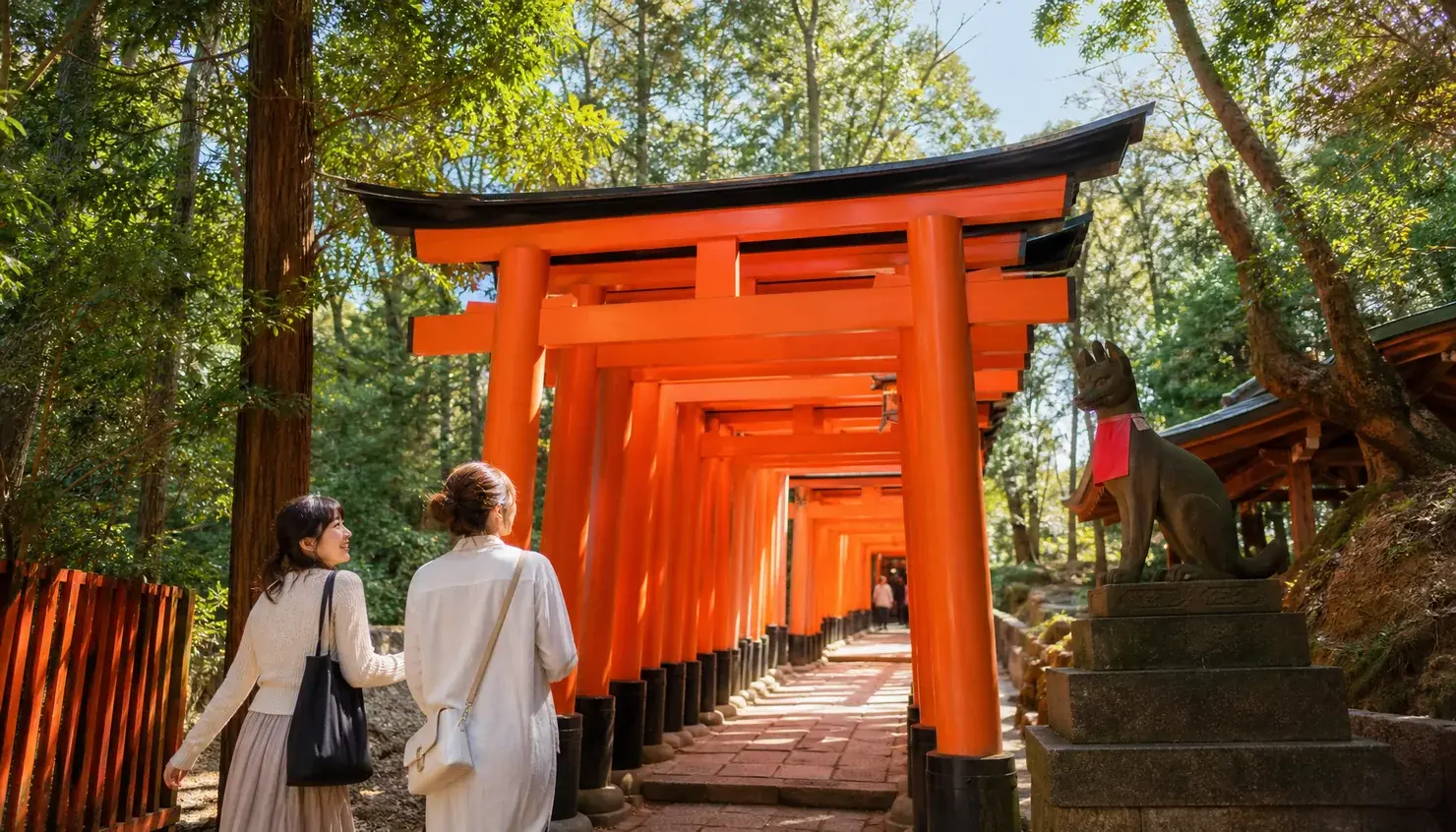
With its mesmerizing tunnels of brilliant vermilion gates—the famous "Senbon Torii"—Fushimi Inari Shrine is hands-down one of Kyoto's most iconic and breathtaking sights. As the head shrine for some 30,000 Inari shrines across Japan, this sprawling sacred site is completely free to enter and open around the clock. Whether you're here for that perfect photo, planning to tackle the sacred Mount Inari forest hike, or looking for insider tips to dodge the massive tourist crowds, this ultimate guide has you covered.

Shiba, is Fushimi Inari that place with the endless tunnels of bright red gates? I’ve seen it all over Instagram, but what is it actually like in person?

Spot on! Those are the famous Senbon Torii (Thousand Torii Gates). Formally known as Fushimi Inari Taisha, the shrine grounds actually stretch all the way up Mount Inari. It’s entirely free to enter, and since there are no gates to close, it's open 24/7. It's incredibly easy to fit into any Kyoto itinerary!
Essential Info: Official Name, Access, and Admission Fees
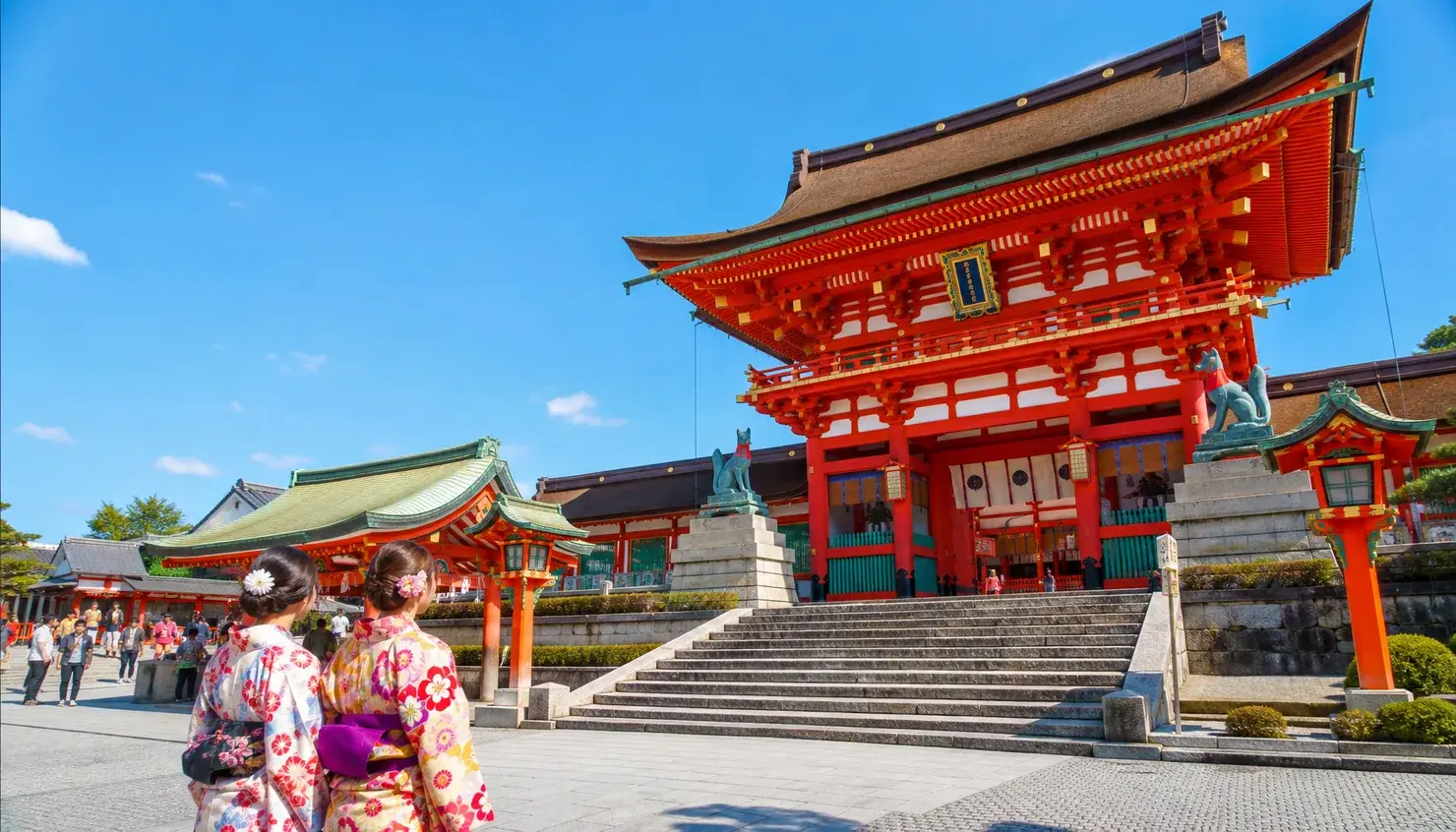
- Official Name: Fushimi Inari Taisha (伏見稲荷大社)
- Address: 68 Fukakusa Yabunouchicho, Fushimi Ward, Kyoto, 612-0882
- Getting There:
- JR Nara Line: Get off at Inari Station—the shrine entrance is right outside the station (just a 5-minute train ride from Kyoto Station).
- Keihan Main Line: A 5-minute walk east from Fushimi-Inari Station.
- Kyoto City Bus (Route Minami 5): A 7-minute walk east from the Inari Taisha-mae stop.
- Note: The shrine’s official website strongly advises using public transit, as the surrounding area gets incredibly congested.
Admission & Opening Hours:
Good news for budget travelers: there is no admission fee to enter the shrine grounds. The official website doesn't list any ticket prices or ticket booths, and major travel guides widely recognize it as a free attraction.
As for opening hours, the grounds themselves have no gates, meaning you can visit 24 hours a day, 365 days a year. (While this 24/7 access is widely reported by travel media and seasoned visitors, keep in mind that the official shrine website doesn't explicitly guarantee 24-hour services, so think of it as a widely accepted local norm).
However, if you want to buy amulets (omamori) or collect temple stamps (goshuin), the shrine offices (授与所 - juyosho) usually close by late afternoon. If you want these keepsakes, make sure to plan your visit between morning and mid-afternoon.
History & Symbols:
Founded in February 711 AD (the Nara period), Fushimi Inari celebrated its 1,300th anniversary in 2011. It is dedicated to Inari Okami, the deity of bountiful harvests, business prosperity, family safety, and the fulfillment of wishes.
As you wander the grounds, you’ll spot numerous stone fox statues (komagitsune). Foxes are believed to be the sacred messengers of Inari Okami. Look closely and you'll see them holding symbolic items in their mouths: stalks of grain (representing agriculture), scrolls (wisdom), jewels (spiritual virtue), or keys (the desire to unlock that spiritual virtue).
The Senbon Torii: Why Are There Actually 10,000 Gates?
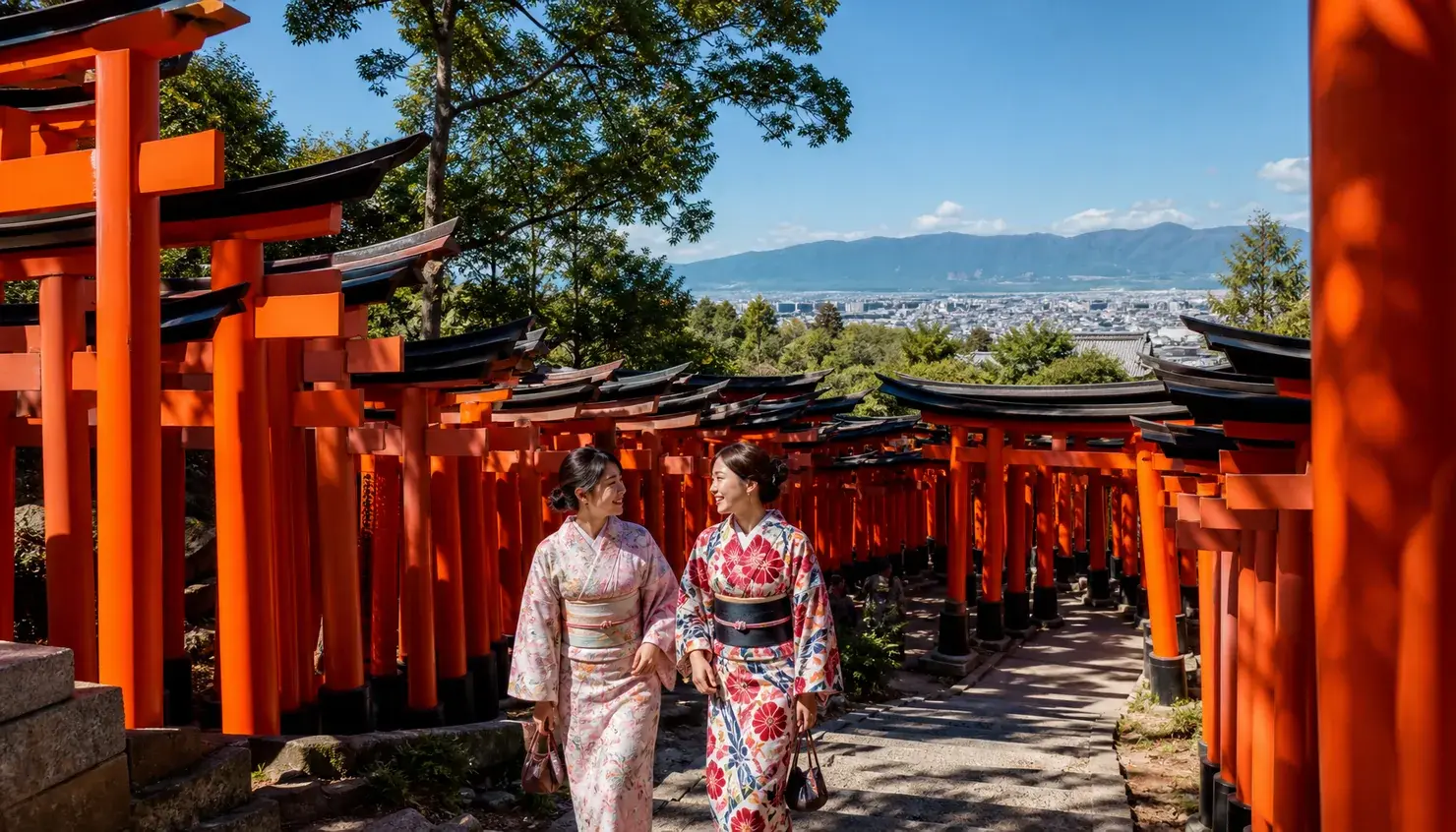
The name Senbon Torii translates to "Thousand Torii Gates," but that's actually a bit of an understatement. "Thousand" is used here idiomatically to mean "countless." In reality, there are roughly 10,000 torii gates scattered across the entire mountain!
According to the shrine, the tradition of donating gates took off during the Edo period (1603–1867) as a way for worshipers to show gratitude for wishes that came true. The iconic, tightly packed double-lane path that you see in all the photographs is a specific 400-meter stretch leading up to the Okusha Hoei-jo (Inner Shrine).
If you look at the back of the pillars, you’ll notice names and dates written in black ink. These are the names of the individuals and businesses who sponsored each gate. Sponsoring a gate is a tradition that continues today; pricing starts at around 300,000 yen (approx. $2,000 USD) for a small size-5 gate in the Senbon Torii area, and goes up significantly depending on the size and location.
It’s no surprise that Fushimi Inari ranked #3 overall in NAVITIME’s "2025 Japan Travel Search Ranking for Inbound Tourists"—just behind Universal Studios Japan and Nara Park. The surreal, dreamlike atmosphere of walking through a continuous tunnel of vermilion is a bucket-list experience for travelers worldwide.
Mount Inari Hiking: The 15-Minute Easy Walk vs. The 2-Hour "O-Yama Meguri" Hike
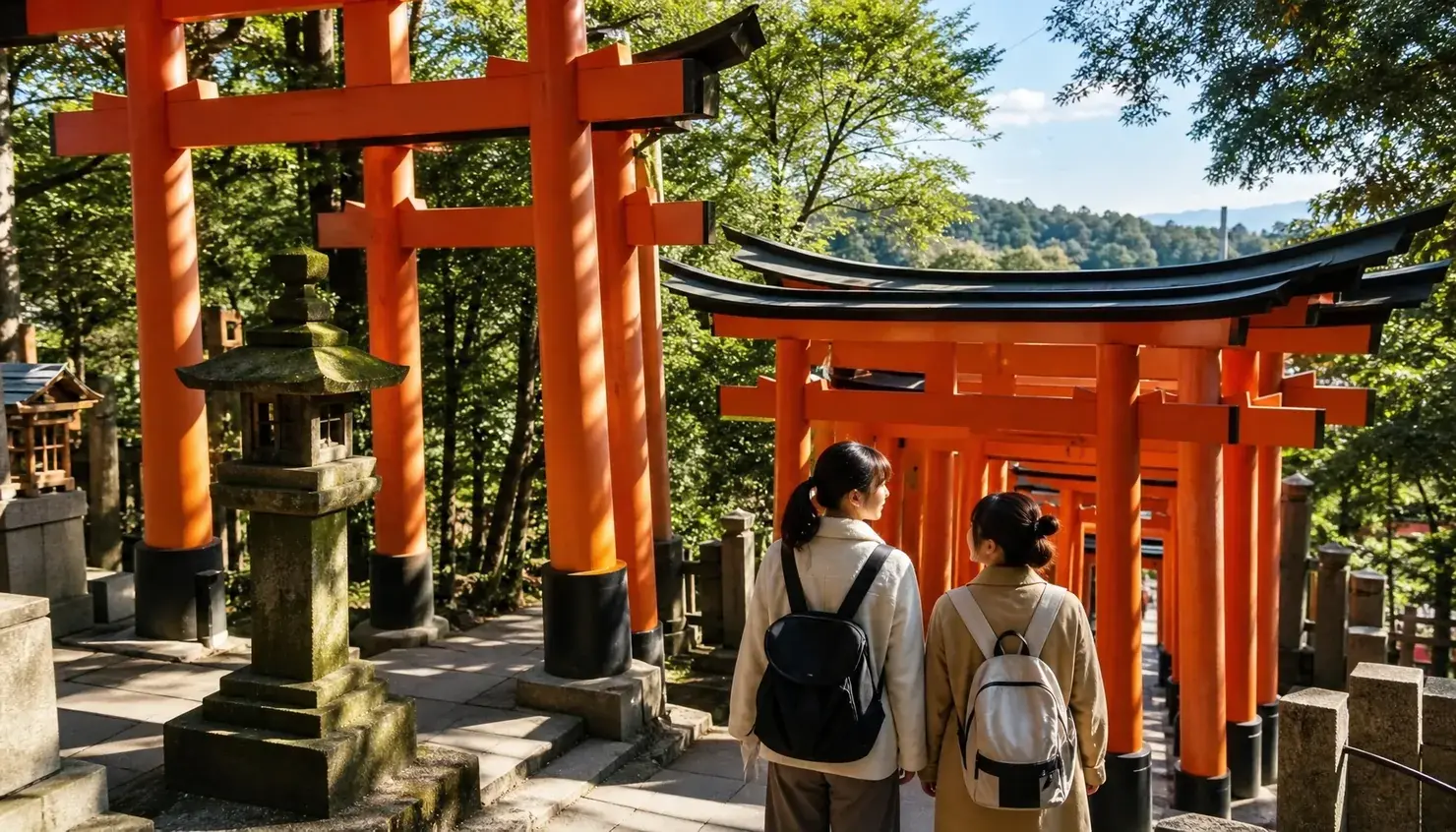
Fushimi Inari isn't just a place where you snap a photo at the entrance and leave. The real magic lies in walking up Mount Inari itself. Depending on your energy level and schedule, you can choose between two main routes:
- The Main Shrine to Okusha Hoei-jo Loop (Easy Walk): 15 to 20 minutes round-trip. If you just want to experience the dense, photo-famous vermilion tunnels, this short, paved walk is perfect.
- The Full "O-Yama Meguri" Mount Inari Hike (Active Hike): A 4-kilometer loop that takes you all the way to the summit at Ichino-mine (233 meters above sea level). Travel guides estimate this takes about 2 to 2.5 hours round-trip. Along the way, you'll pass ancient stone altars, quiet shrines, and the scenic Yotsutsuji intersection, which offers a stunning panoramic view of Kyoto.

Wait, there’s an actual mountain hike? That sounds like a serious workout!

It can be! The full loop takes a solid two to two-and-a-half hours. But don't worry—if you just want to experience the famous "tunnel of gates," the 15-to-20-minute walk to the inner shrine is more than enough. Pick the route that matches your energy and schedule!
If you decide to tackle the full mountain loop, wear comfortable walking shoes (there are plenty of stairs and some uneven forest paths) and bring water. While there are small, charming teahouses along the mountain path, their hours can be unpredictable, so it’s best to be prepared.
How to Beat the Crowds: The Early Bird Gets the Vermilion Gates
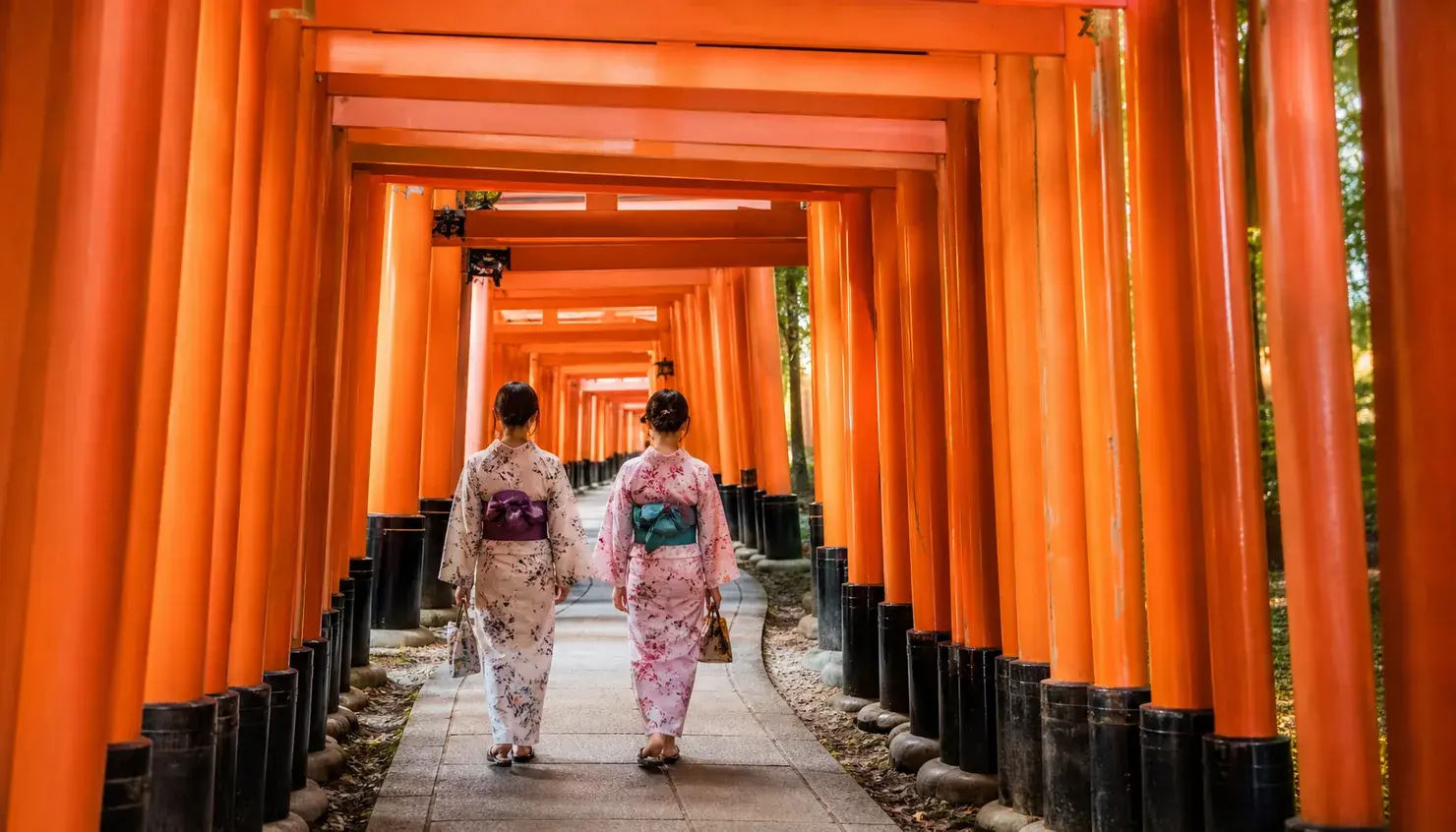
Because Fushimi Inari is open 24/7, the crowd sizes fluctuate wildly throughout the day. Based on countless travel blogs and visitor reviews, here is the general rule of thumb for timing your visit (note: these are based on traveler experiences, not official statistics):
- 6:00 AM to 8:00 AM: Highly recommended. Arriving before 8:00 AM (ideally around 7:00 AM) means you'll share the paths with only a few early risers and locals, making it easy to capture empty-gate photos.
- 9:00 AM onwards: The crowds start rolling in. Even on weekdays, 10:00 AM to 4:00 PM is peak rush hour.
- 11:00 AM to 3:00 PM (Weekends & Holidays): Expect heavy congestion. Tour buses arrive in waves, and the lower sections of the Senbon Torii can feel like a crowded subway station.
- Best Days to Visit: Tuesdays through Thursdays tend to be slightly quieter than weekends or Mondays/Fridays.

Wow, so if I go super early, I can actually have those famous paths to myself?
Absolutely. Early morning is the magic hour. Since the shrine never closes, taking advantage of the early morning (or even a quiet evening stroll) is the absolute best way to dodge the crowds and enjoy the mystical atmosphere at your own pace.
Shrine Etiquette and Rules: What You Need to Know
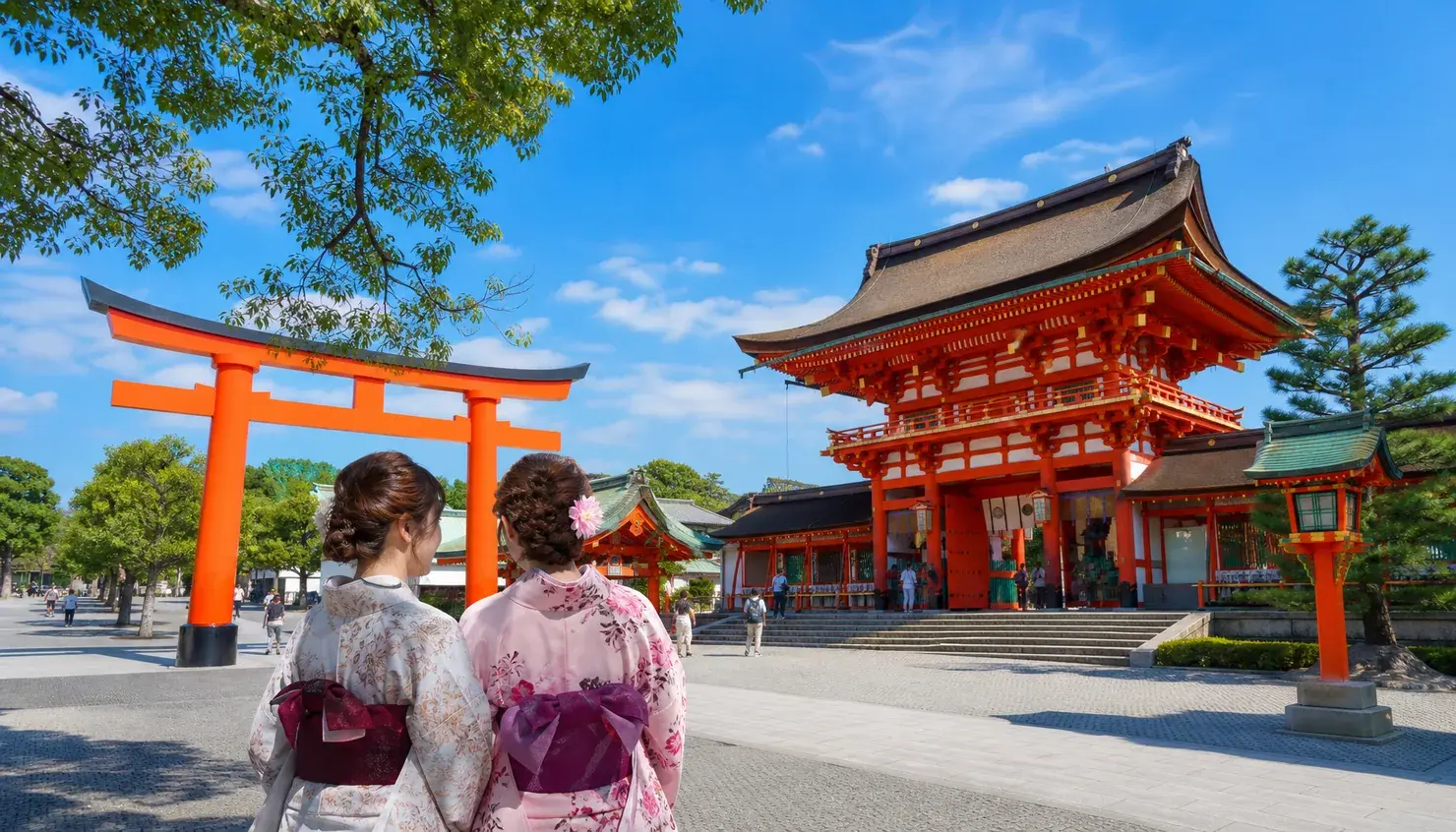
Fushimi Inari Taisha is a sacred religious site, not a theme park. To keep the experience peaceful and respectful, the shrine officially lists the following prohibited activities:
- Smoking or use of open flames.
- Commercial photography, or blocking the narrow pathways for photo shoots.
- Visiting in attire unsuitable for a sacred shrine (such as wedding dresses or highly revealing outfits).
- Walking pets (excluding service dogs), or approaching and feeding wild animals (like the local monkeys or stray cats).
- Littering (keep your plastic bottles and trash with you until you find a bin outside the shrine).
- Trespassing into the main hall, restricted buildings, or fenced-off areas.
- Disruptive behavior, such as shouting, sitting on the paths, or eating/drinking outside of designated areas.
- Flying drones.
Taking casual vacation photos and selfies is perfectly fine! While there is no strict dress code listed on the official site, you will be climbing a lot of stairs if you head up the mountain. Leave the flip-flops and high heels at your hotel—sneakers are highly recommended.
Local Food: Snacking on Inari Sushi along the Approach
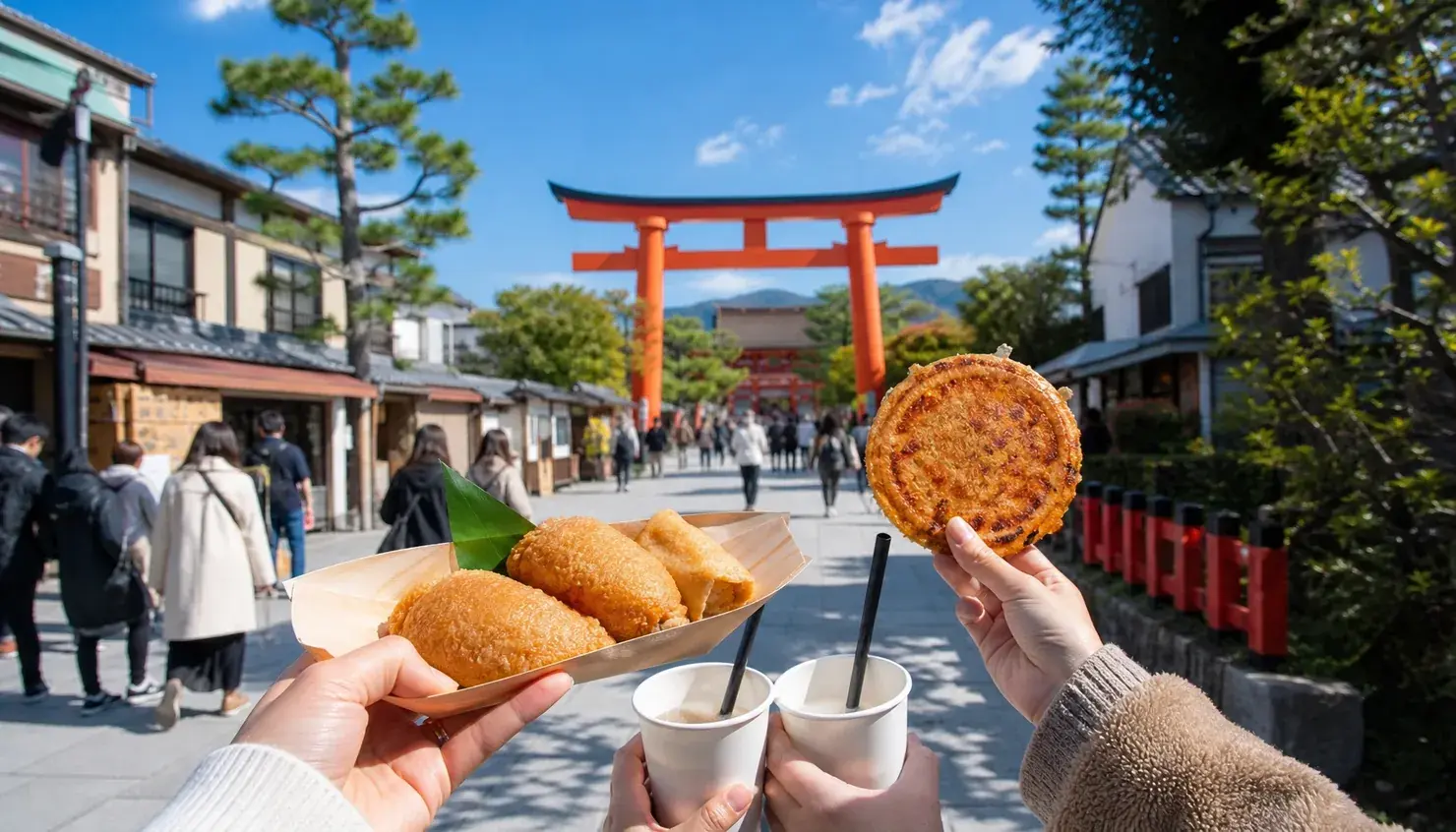
After your walk, you'll want to head to the bustling street food scenes along the two main approach paths: the "Omotesando" (front approach near JR Inari Station) and the "Urasando" (back approach near Keihan Fushimi-Inari Station).
The absolute must-try local specialty is Inari Sushi (sweet, seasoned deep-fried tofu pockets stuffed with sushi rice). Folklore says that fried tofu (aburaage) is the favorite food of the sacred foxes!
Other unique treats commonly sold along the approaches include:
- Inari Senbei: Fox-shaped fortune cookies.
- Amazake & Hiyashi-ame: Sweet fermented rice drinks or chilled ginger sweet drinks.
- Warabi Mochi: Jelly-like starch mochi dusted with sweet toasted soybean powder.
- Grilled Skewers: Traditional grilled quail (uzura) or sparrow (suzume) skewers for the more adventurous foodies.
Keep in mind that shop hours can vary, so the best strategy is to simply wander and see what catches your eye when you arrive!
Want to See Arashiyama & Nara in One Day? Try a Guided Day Tour
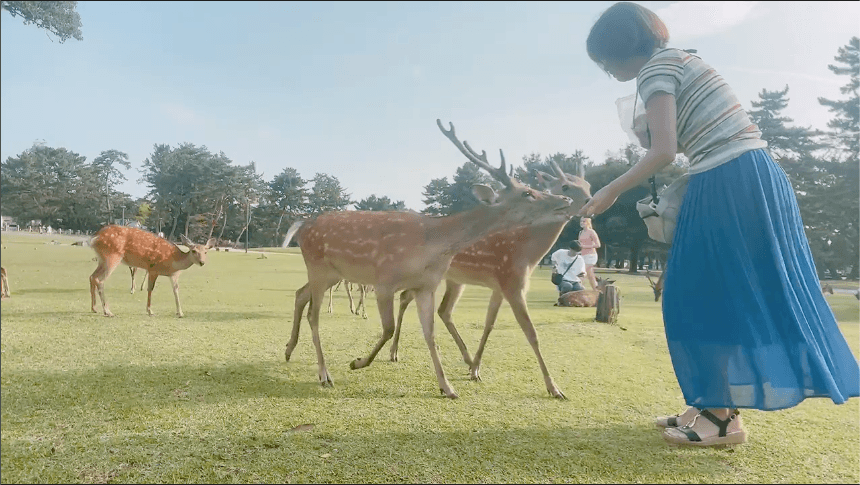
If you have limited time in the Kansai region and want to tick off the wild deer of Nara Park and the breathtaking Arashiyama Bamboo Grove alongside Fushimi Inari in a single day, a structured bus tour is an incredibly efficient option.
One highly rated option is the "Kyoto Arashiyama Fushimi Inari and Nara Deer Day Tour" on Klook. It boasts a 4.9-star rating with over 9,400 reviews and more than 100,000 bookings. Prices vary depending on the package, but generally start around $48.95 USD.
The typical itinerary looks like this:
1. 8:00 AM: Depart from Kintetsu-Nippombashi Station in Osaka.
2. Nara Park (1 hour - Free time): Meet the bowing deer and visit Todai-ji Temple.
3. Fushimi Inari Taisha (1 hour 10 minutes - Free time): Walk the iconic lower tunnels of the Senbon Torii.
4. Arashiyama Area (2.5 hours - Free time): Walk the Togetsukyo Bridge, the Bamboo Forest, and the colorful Kimono Forest.
5. 5:00 PM: Head back to Kyoto Station or Osaka.
The tour includes an English-speaking guide and hassle-free transport. Plus, you can cancel for free up to 24 hours before the tour, giving you plenty of flexibility.
The Catch: Is It Right for You?
Let’s be completely honest: this tour gives you 1 hour and 10 minutes of free time at Fushimi Inari. This is plenty of time to walk the main lower section of the Senbon Torii and snap some incredible photos. However, it is physically impossible to complete the full 2-to-2.5-hour Mount Inari summit hike on this schedule.
If your priority is hiking the sacred mountain and exploring every quiet corner, you should absolutely visit Fushimi Inari on your own. But if you want to capture the highlights of Kyoto and Nara in one seamless, stress-free day, this tour is an unbeatable value.
Wow, hitting Arashiyama, Nara, and Fushimi Inari all in one day sounds amazing! But is an hour and ten minutes at Fushimi Inari enough? It feels a bit rushed.
You’ve got a point. It's the perfect amount of time to stroll through the main torii gate tunnels and take great photos. But if you want to hike all the way up the mountain, this tour won't give you enough time. If you want a slow hike, go independently; if you want to maximize your sightseeing across three major spots, the day tour is a brilliant shortcut.
Summary: Your Fushimi Inari Taisha Checklist
Here is a quick cheat sheet to help you plan the perfect visit:
- Admission is 100% free, and the grounds are open 24/7, making it incredibly flexible.
- The "Thousand Torii" actually consists of about 10,000 gates. The dense, photogenic tunnel is the first 400-meter stretch leading to the inner shrine.
- Choose your track: The 15-to-20-minute easy walk to the inner shrine, or the full 2-to-2.5-hour mountain summit hike.
- Beat the crowds by arriving between 6:00 AM and 8:00 AM on weekdays (Tuesdays through Thursdays are best).
- Respect the sacred space: no smoking, no drones, no pets, and take your trash with you.
- Don’t leave without trying the local Inari Sushi on the temple approach streets.
- If you're short on time, a Kyoto & Nara Day Tour is a fantastic way to see Fushimi Inari, Arashiyama, and Nara in one go—just keep in mind you won't have time for the full mountain hike.
Being able to see such a mystical, world-class sight for free is incredible. Fushimi Inari is definitely going to the top of my list!
It really is a magical place. It’s an absolute must-see when you visit Kyoto. Take your time, enjoy the atmosphere, and have an amazing trip!
Turn this guide into a real trip
Travel tools made by our team — pick what you need.
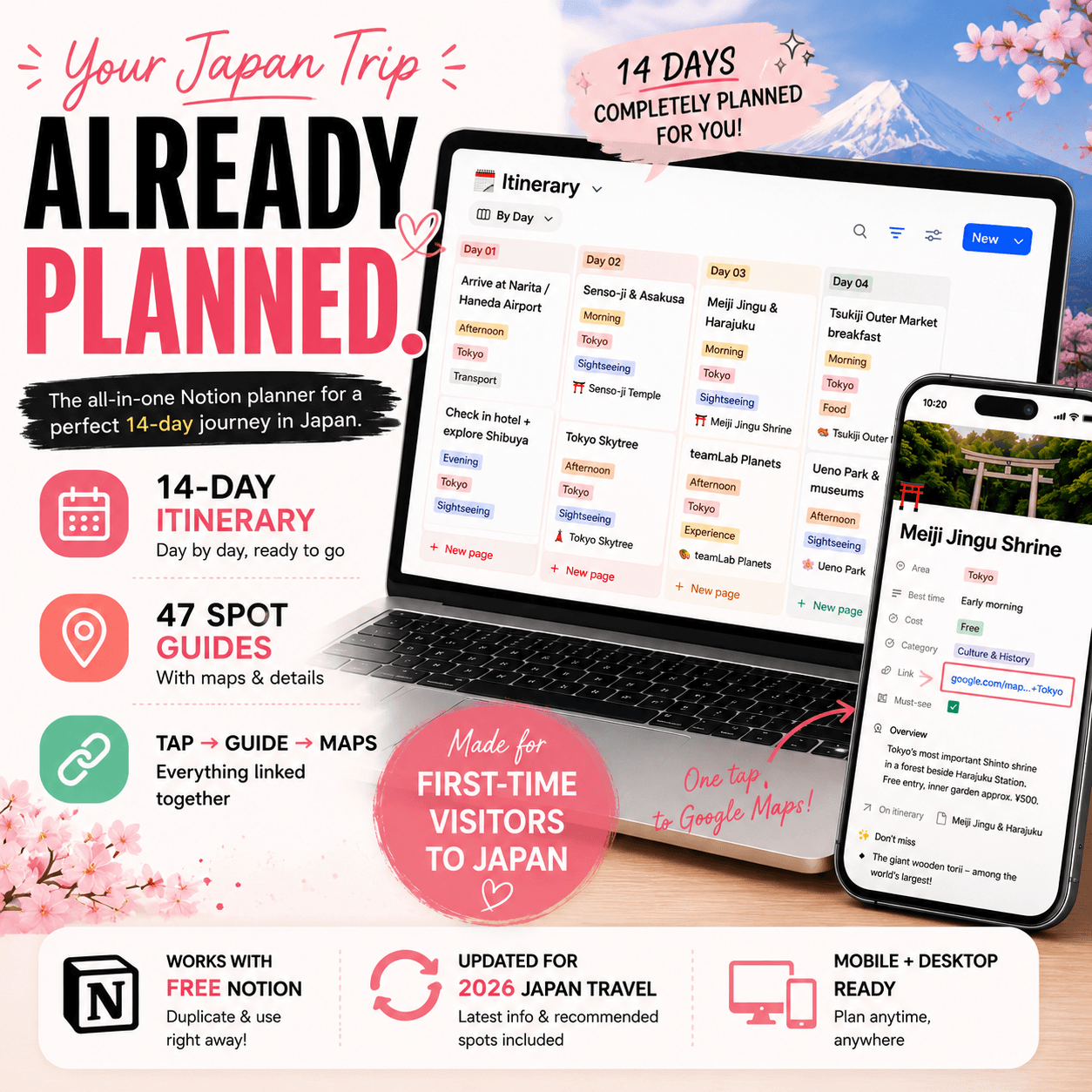
Japan Travel Planner
Editable Notion template, ready for 2026. Plan your trip on your phone, on the go.
See the planner →
Food Allergy Translation Card
Eat out in Japan with confidence. Made by Japan-based locals.
See the card →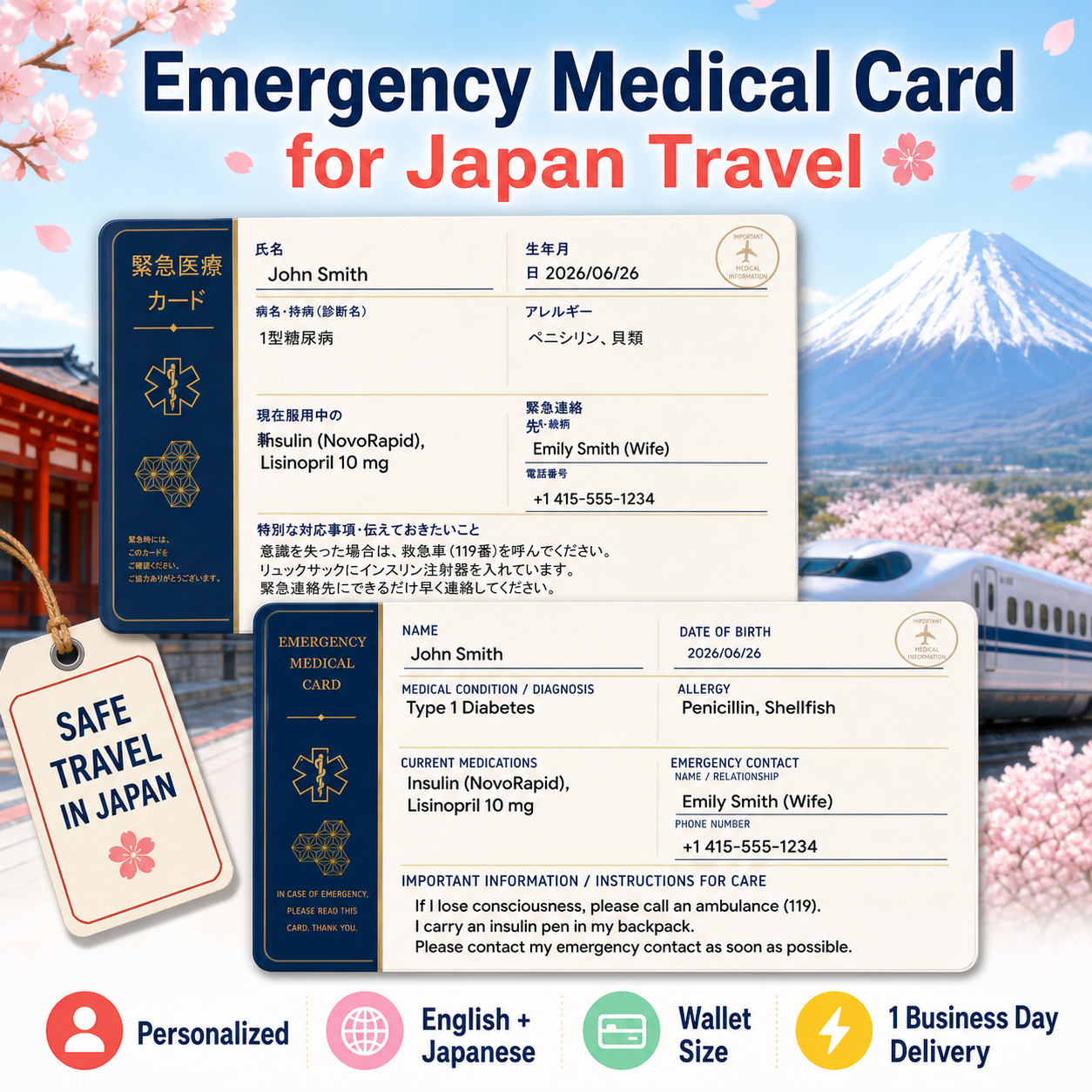
Emergency Medical Card
Your conditions, medications, and emergency contact — in Japanese & English. Wallet-sized, ready for any emergency in Japan.
See the card →
Allergy Card + Food Label Guide
Our restaurant allergy card plus a 10-page guide to reading Japanese food labels — dine out and shop with confidence.
See the set →[PR] These are Etsy products by DokodemoJapan, the team behind this blog.
Keep planning your trip
Kyoto First-Timers: The Early Bird's Guide to Avoiding Crowds in 2026
"I've always dreamed of visiting Kyoto, Japan's ancient capital." If that sounds like you, then welcome! Kyoto, a city vibrant year-round with visitors from acr
Read more →Kyoto to Nara Day Trip 2026: The Ultimate Half-Day Guide to Deer and the Great Buddha
A day trip from Kyoto to Nara takes only about 45 minutes by train. It’s an absolute classic that you’ll regret missing on your first trip to Japan. Plus, 2026
Read more →
First Time Japan Itinerary: The 10-Day Route I'd Give My Best Friend (2026)
So, you're dreaming of Japan, huh? I get it. You've probably already done the usual: fired up Google, scrolled through a million blogs hunting for a first time
Read more →