
Kyoto to Nara Day Trip 2026: The Ultimate Half-Day Guide to Deer and the Great Buddha

Calico
First-time visitor cat

Shiba
Tokyo local guide dog
A day trip from Kyoto to Nara takes only about 45 minutes by train. It’s an absolute classic that you’ll regret missing on your first trip to Japan. Plus, 2026 is an amazing year to visit, with the grand opening ceremony for the reconstructed South Gate of Daigokuden at the Heijo Palace Site on March 14th making this historic city hotter than ever!

Hey Shiba! I’m staying in Kyoto, but is Nara really doable as a day trip? I thought it was super far and would take up a whole day!

Not at all! It’s only about 45 minutes by train, so you can easily hang out with the deer and see the Great Buddha in just half a day. If you start reasonably early, you'll be back in Kyoto by the evening with time to spare!
Getting to Nara from Kyoto: What’s the Best Way?

I keep seeing Kintetsu and JR lines mentioned. Which one should I actually take? I'm totally confused!

Both are solid options, but the "best" one depends on what your sightseeing goals are and what rail pass you're holding. Let me break it down for you!
You basically have three main routes to choose from:
- Kintetsu Kyoto Line (Express): Kyoto Station (Kintetsu) to Kintetsu-Nara Station. Takes about 45–55 minutes and costs ¥760. Kintetsu-Nara Station is much closer to Nara Park, making it super convenient to start walking right away. If you want a speedier, more comfortable ride, the Limited Express takes about 35 minutes for ¥1,280 (which includes a ¥520 express surcharge).
- JR Nara Line (Miyakoji Rapid Service): Kyoto Station to JR Nara Station. Takes about 45 minutes and costs ¥720. If you have a JR Pass, this is your go-to option since it's fully covered. Just keep in mind that JR Nara Station is about a 15–20 minute walk to Nara Park.
- Easy Access from Osaka (Namba) Too: Kintetsu-Namba to Kintetsu-Nara takes about 30–40 minutes and costs around ¥700. If you’re staying in Osaka, Nara is just as easy to reach!

Oh wait, I thought the JR Pass worked on Kintetsu trains too!

Ah, unfortunately not. Kintetsu is a private railway, so it's not covered by the JR Pass. You'll need to either stick to the JR Nara Line or buy a separate Kintetsu ticket. If you're traveling from Kyoto on a budget without a pass, the JR Nara Line for ¥720 is as simple as it gets.
Befriending the Free-Roaming Deer of Nara Park
Wait, are the deer in Nara seriously just walking around the streets? Like, it's not a zoo? How does that even work?!
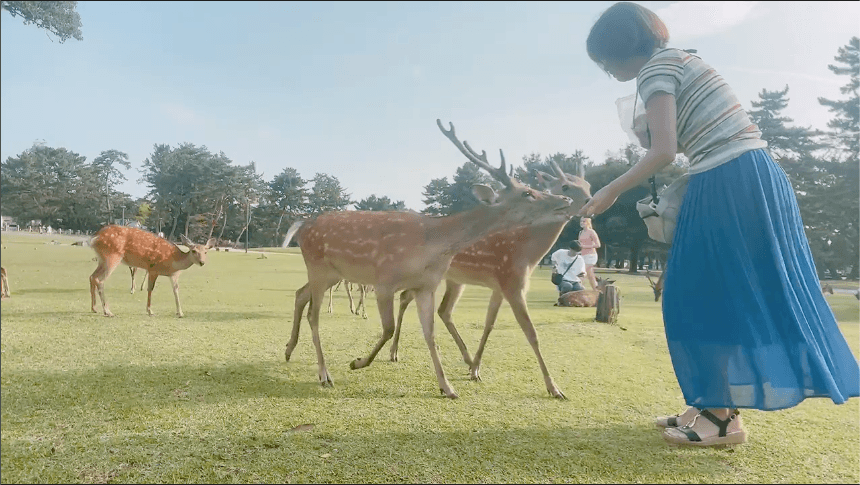
It's 100% real! Nara Park has no entrance fee, and about 1,300 wild deer roam completely free. Anyone seeing it for the first time is guaranteed to lose their mind with excitement (haha).
Nara Park is completely free to enter! You can buy shika-senbei (deer crackers) for ¥200 per pack (10 crackers) from local vendors around the park. If you time it right and bow to them, some of the polite deer will actually bow back to beg for a treat!
Crucial Rules for Getting Along with the Deer:
- Never feed them anything other than shika-senbei (no bread, vegetables, or human snacks). It's terrible for their health and violates park rules.
- Feed them immediately after buying! If you tease them or try to hide the crackers, they can get a bit pushy and might give you a gentle nudge or headbutt.
- Guard your bags and pockets. These deer are clever and might try to rummage through plastic bags looking for food!

Woah, so they can be a bit demanding? I thought they were just gentle little forest creatures!
They are used to tourists, so they definitely know how to ask for what they want! The trick is to either feed them right away or pack the crackers deep inside your bag so they know the kitchen is closed.
Stand in Awe of Todai-ji’s Great Buddha — 2026 Updates
Just how big is the Great Buddha anyway? It's so hard to tell the scale from photos!
It stands at about 14.7 meters (48 feet) tall! Cast in the 8th century, it’s the largest bronze Buddha statue in Japan. Standing right in front of it, you can't help but whisper "wow, that's massive." Plus, the Daibutsuden (Great Buddha Hall) itself is one of the largest wooden buildings in the world.
As of 2026, the admission fee for Todai-ji’s Great Buddha Hall is ¥800 for adults and ¥400 for children (ages 6–12) (as of 2026 / please check the official site for updates). Prices have gone up from the previous ¥600, so keep that in mind. If you want to visit the Todai-ji Museum as well, the combination ticket is ¥1,200 and offers great value.
Things You Must Do at Todai-ji:
- Squeeze through the Pillar’s Nostril: Inside the hall, there is a wooden pillar with a hole at the base said to be the exact same size as the Great Buddha’s nostril. Squeezing through is believed to bring good fortune and enlightenment. Give it a shot!
- Hokke-do (Sangatsu-do): A quieter sub-temple packed with national treasures. It’s the perfect spot to escape the crowds and soak in the ancient atmosphere.
- Audio Guide (¥500): Highly recommended. It gives you a whole new level of appreciation for the incredible history behind this place.

Squeezing through a pillar... can adults actually fit in there? I’m a little nervous!
Tons of adults do it every single year, so don't worry! It might be a tight squeeze depending on your build, but it’s absolutely worth trying for the memory (and the laughs).
Kasuga Taisha: Walking the Path of Stone Lanterns and Deer
Is Kasuga Taisha close to Todai-ji? Can I easily visit both in one go?
Absolutely! It's all within the bounds of Nara Park, so you can easily walk there from Todai-ji. Walking up the forested path lined with ancient stone lanterns while deer stroll alongside you is a magical experience unique to Nara.
At Kasuga Taisha, entering the main sanctuary costs ¥700, but the outer grounds are completely free to explore. There are over 3,000 stone and bronze lanterns throughout the shrine, and they look incredibly mystical in the morning light.
Half-Day vs. Full-Day Itinerary: Which Is Right for You?
What does a "half-day" trip actually look like? I'm having trouble picturing the timeline!
If you just want to see the deer and the Great Buddha, you can easily do it in 3 to 4 hours. If you have more time, you can comfortably add Kasuga Taisha to the mix!
【The Half-Day Plan (Approx. 3–4 Hours)】
- 9:00 AM – Arrive at Kintetsu-Nara Station
- 9:15 AM – 10:00 AM – Hang out with the deer in Nara Park
- 10:00 AM – 11:30 AM – Explore Todai-ji and the Great Buddha Hall (with audio guide)
- 11:30 AM – 12:30 PM – Grab lunch in the historic Naramachi district
- 1:00 PM – Head back to Kyoto or Osaka on the train
【The Full-Day Plan (Approx. 8 Hours)】
- This plan lets you take your time exploring Todai-ji, Kasuga Taisha, and Naramachi before heading over to the massive Heijo Palace Site.
- It’s easy to pace yourself and still be back in Kyoto or Osaka by 5:00 or 6:00 PM.
What’s Hot in 2026: Heijo Palace Site, Suzaku Gate, and Daigokuden
Wait, what is the Heijo Palace Site? I didn’t know there was another major spot!
It was the heart of Japan's ancient capital, Heijo-kyo, during the Nara period (710–784 AD). This was the political and diplomatic center where the emperors who built the Great Buddha actually ruled! In 2026, the reconstructed South Gate of Daigokuden is hosting its grand opening ceremony on March 14th, making it the most exciting new spot to visit this year!
What is the Heijo Palace Site?
In 710 AD, Japan's first permanent, full-scale capital, Heijo-kyo, was established in the Nara Basin. Modeled after Chang'an, the capital of China’s Tang Dynasty, it was a massive international city with a population of around 100,000. Heijo Palace sat at its north-central core—housing the emperor's residence and the government ministries. It was designated a UNESCO World Heritage Site in 1998 as part of the "Historic Monuments of Ancient Nara."
Admission to all facilities is completely free.
Three Can't-Miss Highlights at Heijo Palace:
- Suzaku Gate (Suzakumon): The grand southern entrance to the palace, standing about 22 meters tall. Reconstructed in 1998, this brilliant vermilion gate towering over a vast gravel plaza is highly photogenic. It gives you a sense of "imperial scale" that is completely different from Todai-ji or Kasuga Taisha.
- First Daigokuden (Great Hall of State): The "palace of palaces" where the emperor held crucial state ceremonies. Reconstructed in 2010, the massive building (27 meters high and 44 meters wide) shows the true power of ancient Japan. You can even walk inside to see the reconstructed throne!
- Heijo Palace Izanaikan: A state-of-the-art museum (entirely free) that introduces the lifestyle, food, clothing, and international relations of the Nara period through models, interactive displays, and artifacts. You can even try on ancient court robes (such as Sokutai and noblewomen's garments) and learn about the craftsmanship of the era. Visiting this place first makes seeing the gates and halls ten times more impressive!
While Todai-ji and Kasuga Taisha can get packed with tourists, the Heijo Palace Site offers a peaceful, wide-open space to breathe. Spanning 132 hectares, it also features a unique sight: the Kintetsu railway line runs right through the middle of the archaeological park, allowing modern trains to glide past reconstructed ancient gates.
It’s about a 15–20 minute walk from Kintetsu Yamato-Saidaiji Station (check the official site for access routes). If you're doing a full-day itinerary, this is an absolute must-visit!
Nara Food Guide: Must-Try Local Delicacies
What kind of food is Nara famous for? I want to try absolutely everything!
I put together a quick cheat sheet for you! These are unique, traditional flavors that will make you glad you made the trip.
- Kakinoha-zushi: Pressed sushi wrapped in persimmon leaves, usually topped with salted mackerel or salmon. They are compact, delicious, and perfect for a quick snack while walking around.
- Miwa Somen: Hailing from the Miwa region of Nara, this is the birthplace of Japanese somen noodles. They are incredibly thin, have a satisfying chew, and are beautifully simple.
- Narazuke: Traditional pickles cured in sake lees. They have a strong, distinct, and slightly sweet alcoholic flavor—a very popular souvenir!
- Kinako Mochi: Fresh, chewy mochi covered in sweet toasted soybean flour (kinako). You can easily find these sweet treats at cozy cafes in Naramachi.
The Naramachi area is packed with great restaurants catering to travelers, and many places now offer English menus.
Conclusion: Nara is a Journey, Not just an Afterthought!
I can't believe there's so much to see in just a half-day trip! I would have seriously regretted skipping Nara!
Right? The combination of wild deer and the Great Buddha is something you won't find anywhere else in the world. If it's your first time in Japan, Nara is a non-negotiable!
Quick Recap for Your 2026 Nara Day Trip:
- Only 45–55 mins from Kyoto via Kintetsu Express (¥760), or covered by the JR Pass via the JR Nara Line (¥720).
- Nara Park is free to enter, and deer crackers are only ¥200 a pack.
- Todai-ji’s Great Buddha Hall is ¥800 for adults (as of 2026 / check official site), or ¥1,200 for a combo ticket with the museum.
- Heijo Palace Site is 100% free—including dress-up experiences, interactive exhibits, and grand reconstructed ruins.
- A half-day is great for the highlights, but a full day lets you dig much deeper into Nara’s magical history.
If you're still planning your overall Japan route, lock in your schedule and make sure to carve out some time for Nara. It’s bound to be one of the highlights of your entire trip!
Turn this guide into a real trip
Two travel companions made by us — pick what you need.
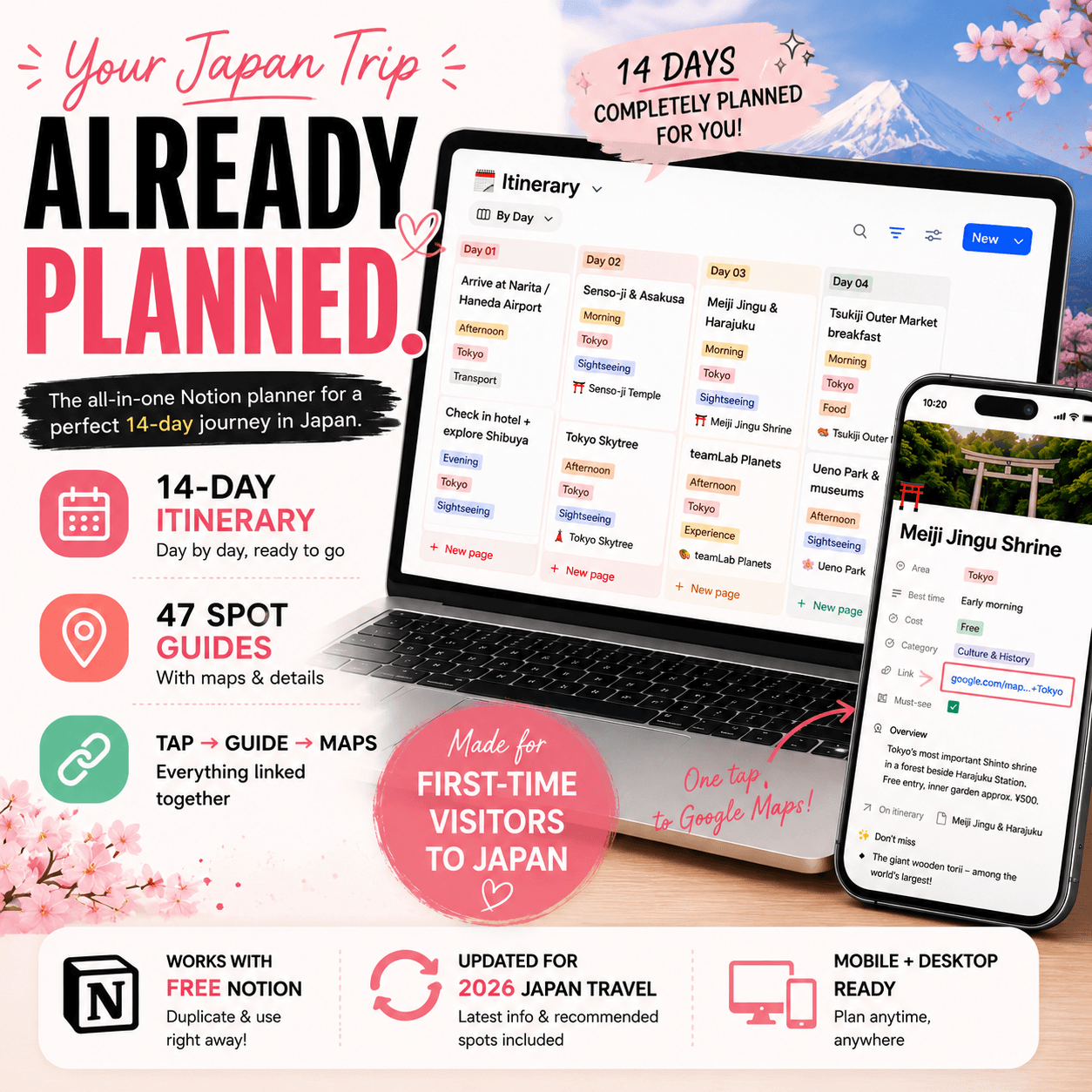
Japan Travel Planner
Editable Notion template, ready for 2026. Plan your trip on your phone, on the go.
See the planner →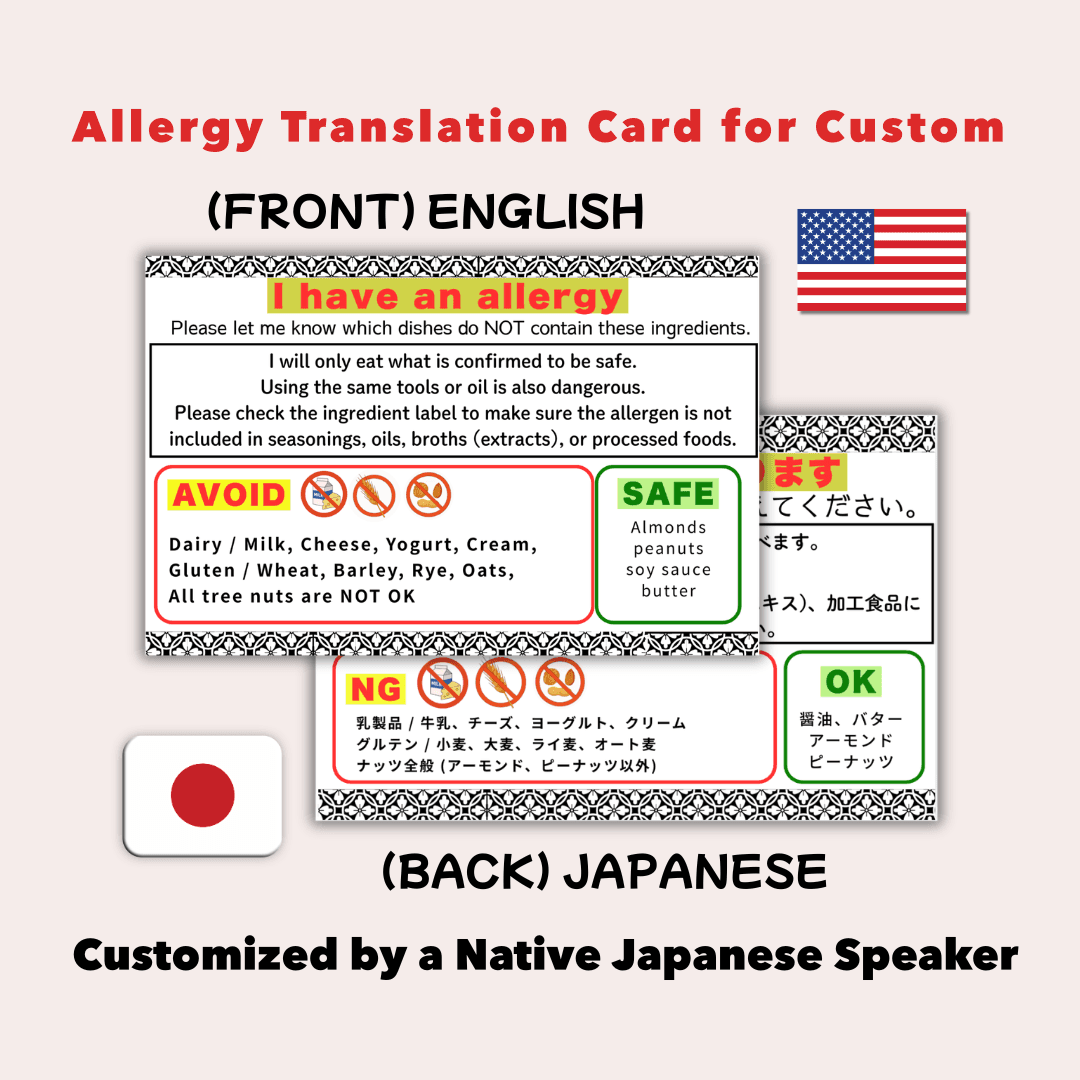
Food Allergy Translation Card
Eat out in Japan with confidence. Made by Japan-based locals.
See the card →[PR] These are Etsy products by DokodemoJapan, the team behind this blog.